 The Green Lab
The Green Lab
The Green Lab
One of our flagship efforts is the Black Men’s Health Study, funded by Genentech and conducted with Kappa Alpha Psi Fraternity, Inc. This study investigates health disparities affecting Black men, promotes preventive care, and provides culturally tailored education and resources, with the goal of improving health outcomes and advancing health equity.
Learn moreThis M-CARES-funded project represents Phase 1 of a three-phase program that will ultimately lead to the development and testing of this tailored conversational AI tool. In this initial phase, we will explore attitudes, knowledge, and willingness to use generative AI tools (such as ChatGPT, Claude, Llama, or similar platforms) among racially and ethnically diverse populations, including individuals living with MM and MGUS. Findings from this phase will directly inform the design, cultural adaptation, and future implementation of the conversational avatar in Phases 2 and 3.
Learn more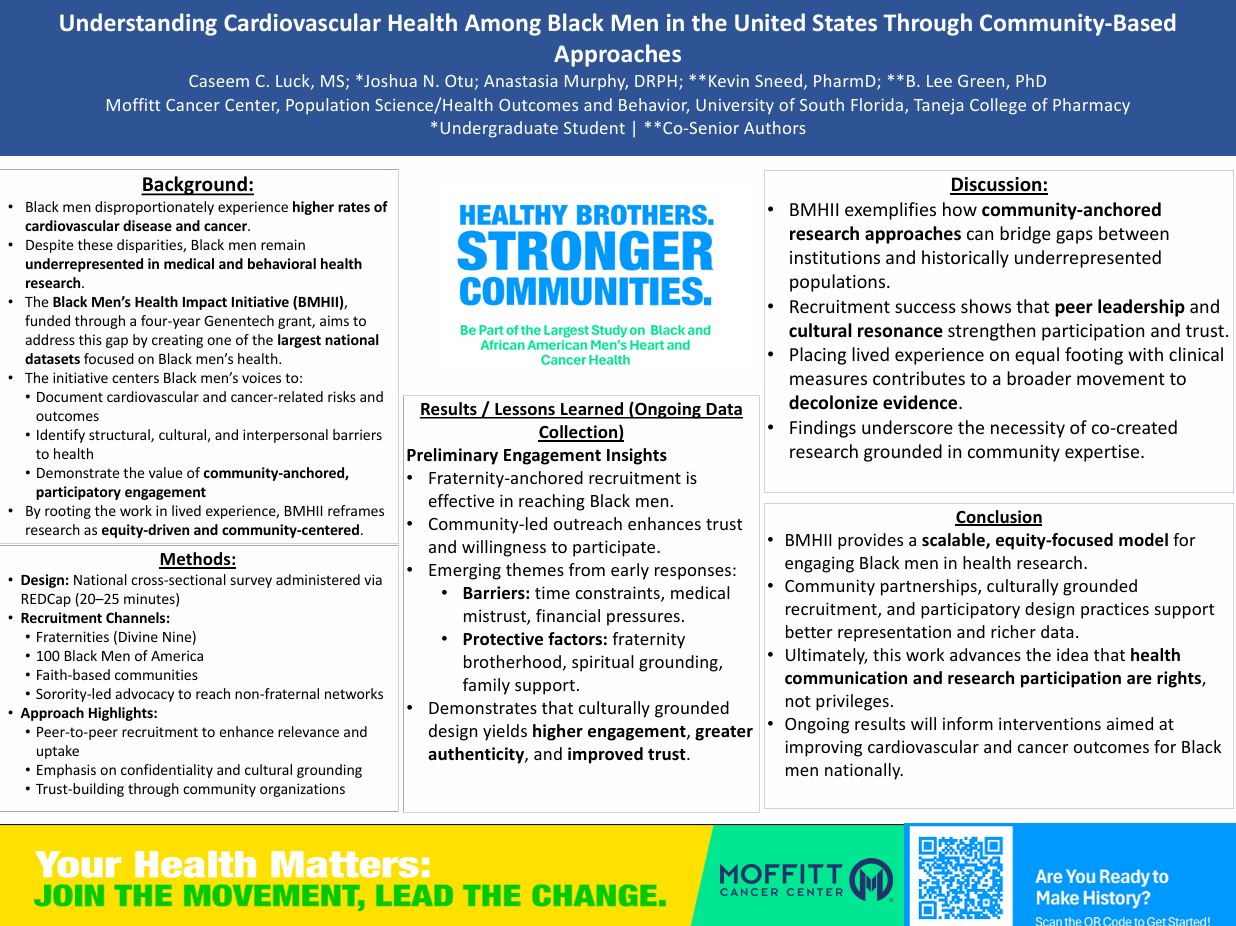
Presented at: 2025 Health Disparities Retreat Moffitt Cancer Center
Authors:
Caseem C. Luck, MS; *Josh N. Otu; Anastasia Murphy, DRPH; **Kevin Sneed, Pharm.D.; **B. Lee Green, PhD
Moffitt Cancer Center, Population Science / Health Outcomes and Behavior
University of South Florida, Taneja College of Pharmacy
Undergraduate Student
What This Study Is About
Black men in the United States experience higher rates of heart disease and cancer, yet they are often underrepresented in health research. The Black Men’s Health Impact Initiative (BMHII) aims to change this by building one of the largest national studies focused specifically on Black men’s health and lived experiences.
Why This Matters
The project seeks to:
By centering Black men’s voices, the study reframes health research as inclusive, community‑anchored, and culturally grounded.
How the Study Works
Researchers are conducting a nationwide survey shared through trusted community networks, including:
The 20–25‑minute survey asks about daily habits, stress, support systems, and personal reflections. Recruitment relies on peer outreach and culturally familiar messengers to ensure participants feel respected and heard.
What We’re Learning So Far
Although data collection is ongoing, early participation shows:
These early lessons highlight the importance of culturally grounded strategies and peer leadership.
What This Means for the Future
BMHII demonstrates how community‑anchored research can transform health equity. By valuing lived experience alongside clinical data, the study:
Ultimately, this work supports a more just and inclusive approach to health research—one that recognizes health communication as a right and elevates community wisdom as essential evidence.
Authors:
Joshuah Otu¹; Cherell Cottrell‑Daniels, PhD, MPH²; Caseem Luck, MS¹; Brooke Bethune, BS¹; Brian Gonzalez, PhD¹; B. Lee Green, PhD¹
¹Moffitt Cancer Center, Department of Health Outcomes & Behavior
²Health Choice Network, Miami, FL
What This Study Is About
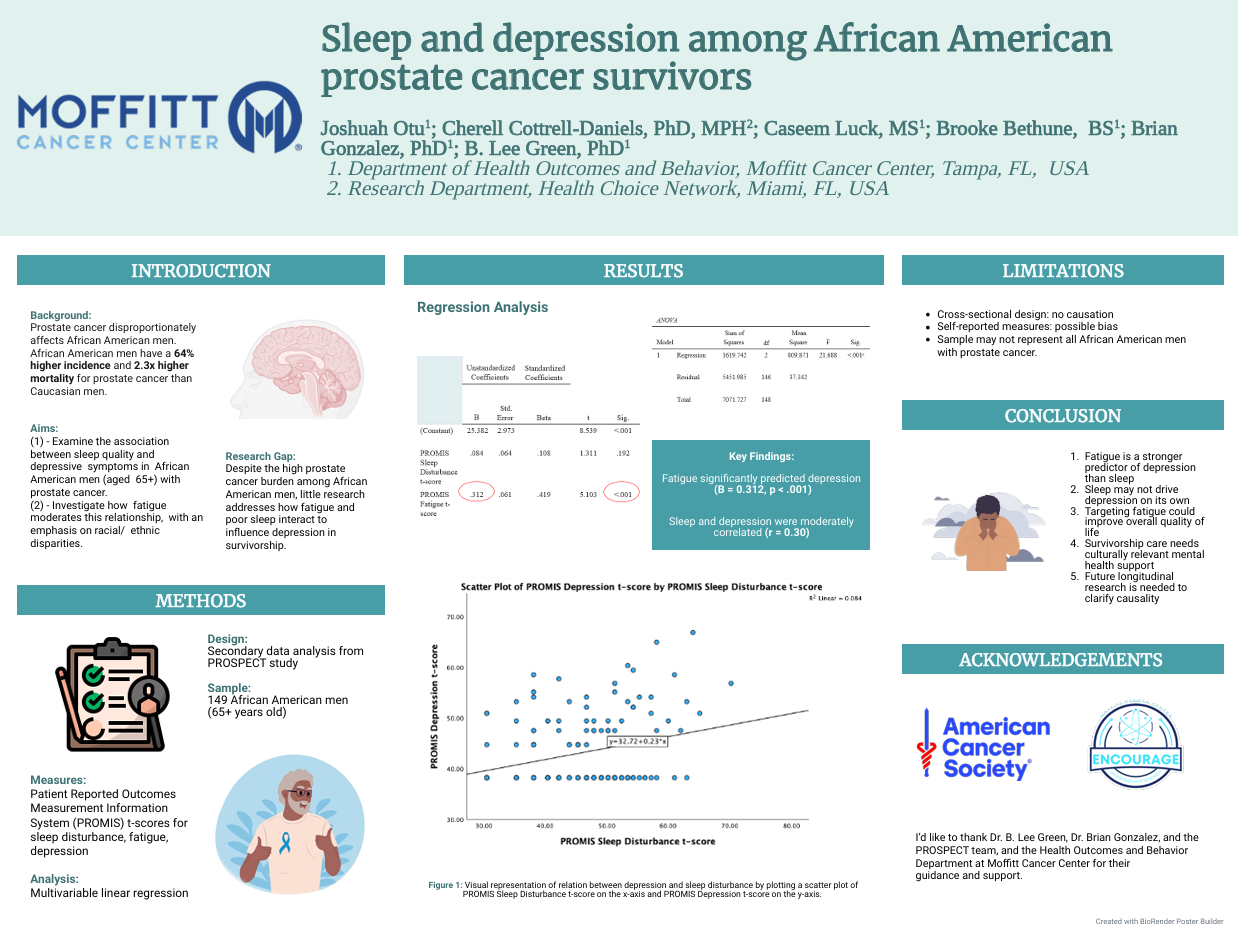
African American men face the highest rates of prostate cancer in the United States—experiencing both higher diagnosis rates and more than double the mortality risk compared to white men. While sleep problems and depression are known challenges for prostate cancer survivors, very little research has focused specifically on how these issues affect African American men.
This study explores how sleep, depression, and fatigue interact in older African American prostate cancer survivors.
Why This Matters
Understanding these relationships is important because:
The goal is to identify where support and interventions are most needed.
How the Study Was Conducted
Researchers analyzed data from 149 African American prostate cancer survivors (age 65+) who completed the PROSPECT survey. Participants answered questions about:
All measures were standardized using PROMIS scoring tools.
What We Found
Early findings show:
This suggests that fatigue may be a key driver of mental health challenges among African American prostate cancer survivors.
What This Means for Survivors
These results highlight fatigue as a critical area for intervention. Addressing fatigue—through physical activity programs, symptom management, or supportive care—may help reduce depression and improve overall well‑being.
The study also reinforces the need for racially responsive, culturally informed care to ensure African American survivors receive equitable support.
Looking Ahead
Future research should:
This work contributes to closing gaps in survivorship care and improving quality of life for African American men living with prostate cancer.
Authors:
Brooke Bethune; Marilyn Horta, PhD; Joshuah Otu; Cherell Cottrell‑Daniels, PhD, MPH; Caseem Luck, MS; Chazz Lezama‑Francois, MS; Christine Vinci, PhD; B. Lee Green, PhD
Department of Health Outcomes and Behavior, Moffitt Cancer Center, Tampa, FL
What This Review Is About
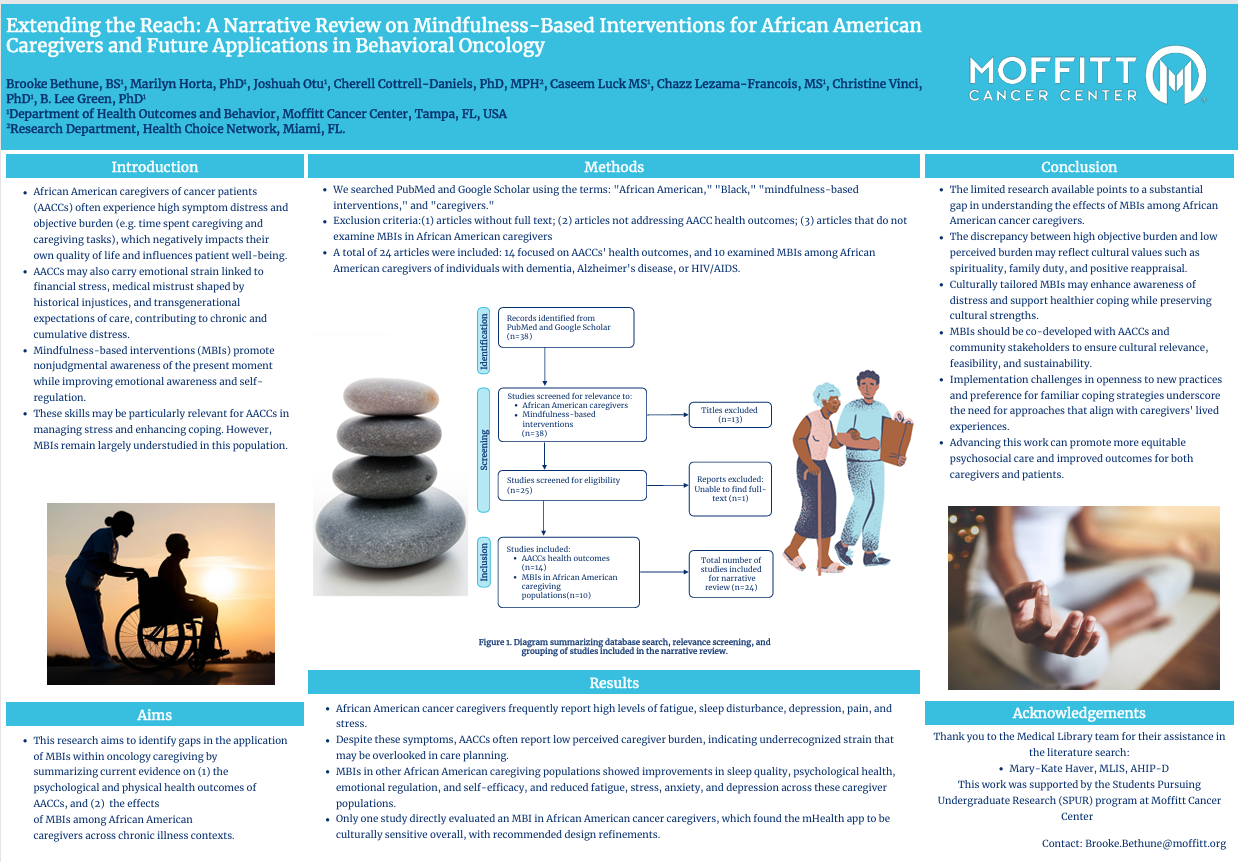
African American caregivers of cancer patients often experience high levels of fatigue, stress, depression, and sleep disturbance—yet they report lower perceived burden than other groups. This pattern may reflect cultural strengths such as spirituality, family duty, and positive reappraisal. Mindfulness‑based interventions (MBIs) have shown benefits across many populations, but remain significantly understudied among African American cancer caregivers.
Why This Matters
This review seeks to:
By integrating cultural strengths with mindfulness practices, MBIs may offer a meaningful pathway to improve caregiver well‑being and promote equitable psychosocial care.
How the Review Was Conducted
A narrative review of peer‑reviewed articles published between 2012–2025 was conducted using PubMed and Google Scholar. Twenty‑four articles met inclusion criteria. Fourteen studies examined health outcomes among African American cancer caregivers, while ten evaluated MBIs among African American caregivers of individuals with dementia, Alzheimer’s disease, or HIV/AIDS.
What We Found
Key findings include:
What This Means for the Future
African American cancer caregivers face substantial, often underrecognized distress. Culturally tailored MBIs may help caregivers better identify and manage symptoms while honoring cultural values that shape caregiving experiences. Future research should adapt and test mindfulness programs specifically within oncology to ensure equitable access to supportive care.